Hindu Marriage Biodata Format
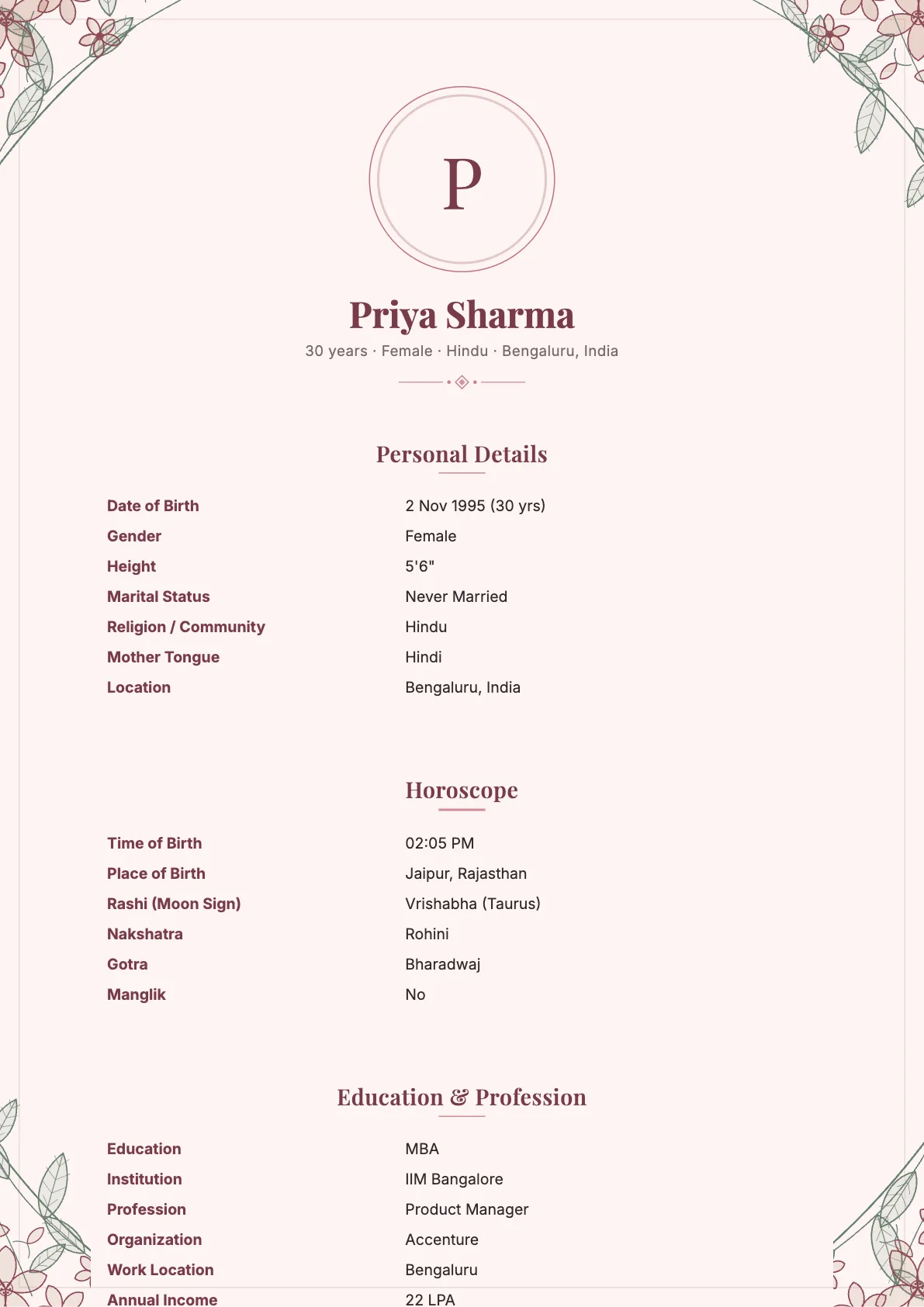
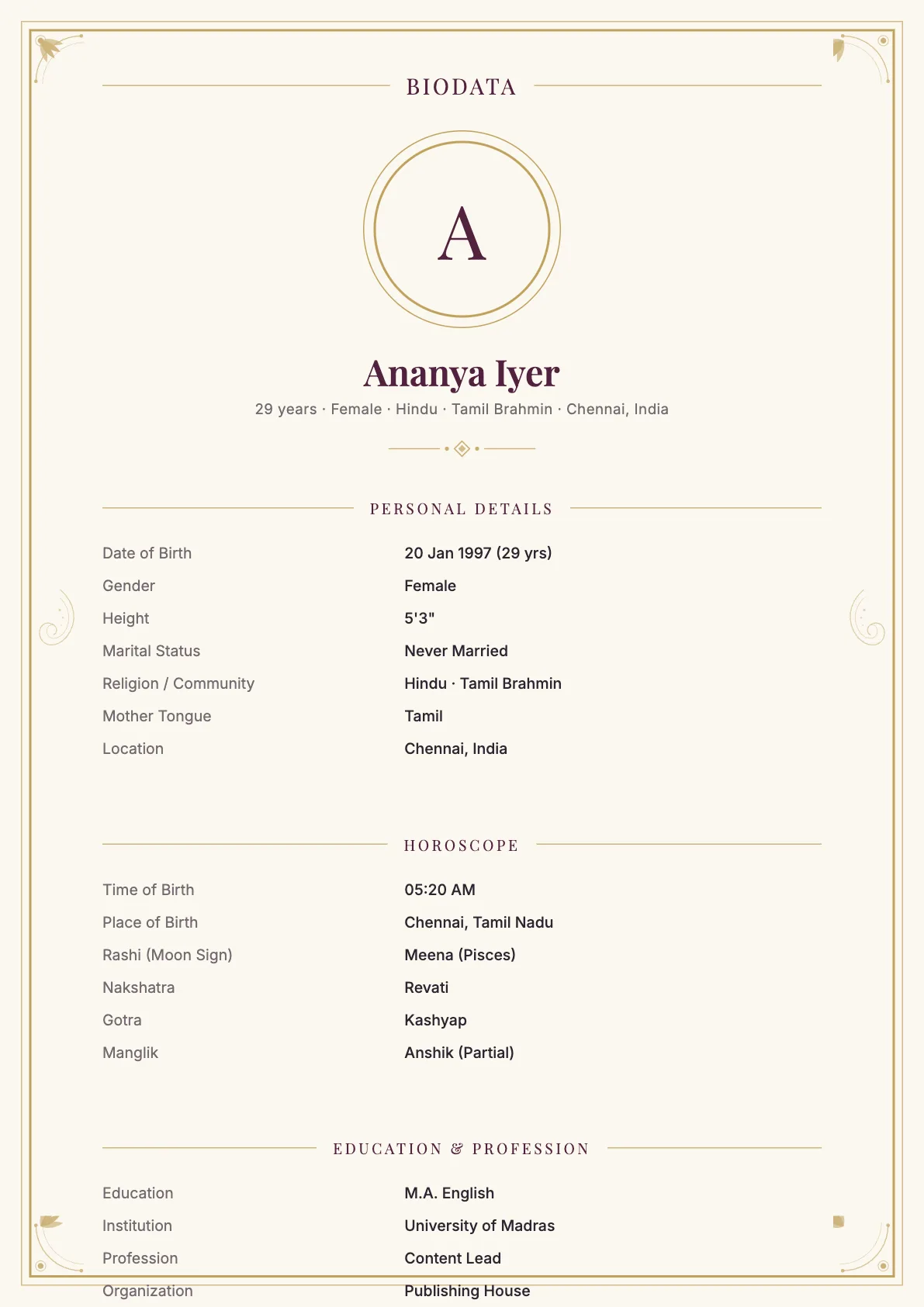
A Hindu marriage biodata usually carries one section the others do not: the horoscope. Gotra, rashi, nakshatra and manglik status are what many families check first, so they belong on the page rather than in a follow-up conversation.
What sets a Hindu biodata apart
Most of a marriage biodata is the same whatever the community: name, date of birth, height, education, profession, family. What distinguishes a Hindu biodata is the horoscope block, because kundli matching is still a common step before families meet.
The details usually expected are time of birth and place of birth (both needed to cast the chart at all), rashi or moon sign, nakshatra, gotra and manglik status. Leaving out time and place is the single most common omission, and it stalls things — an astrologer cannot do anything without them.
Gotra carries a specific function. Many communities practise gotra exogamy, meaning a match within the same gotra is ruled out, so families look for it early. If your family does not observe this, leaving the field blank is perfectly normal.
Choosing an invocation
Hindu biodata are conventionally headed with an invocation. The three in common use are ॥ श्री गणेशाय नमः ॥ (Shri Ganeshaya Namah), ॐ (Om) and the swastik.
Ganesh is the most frequent choice, since Ganesha is invoked at the start of any new undertaking. Om and the swastik are quieter alternatives. None of them is required, and some families prefer no invocation at all.
How much detail to give
Income and caste are the two fields people agonise over. Both are optional here. A broad band ("12–15 LPA") communicates enough without inviting negotiation, and many families now leave income off entirely and discuss it when a match looks serious.
Partner preferences are worth filling in properly. A biodata that states an age range, an education level and a location saves everyone a round of mismatched proposals.
Field-by-field guidance
| Field | What to put |
|---|---|
| Time of birth | Required for kundli matching. To the minute if you have it on record. |
| Place of birth | City and state. Needed alongside time to cast the chart. |
| Rashi | Moon sign. The maker lists all twelve with their western equivalents. |
| Nakshatra | Birth star, one of 27. Often used for compatibility scoring. |
| Gotra | Included where the family practises gotra exogamy. Optional otherwise. |
| Manglik | Yes, No, or Anshik (partial). Leave blank if the family does not observe it. |
Frequently asked questions
- Is the horoscope section mandatory on a Hindu biodata?
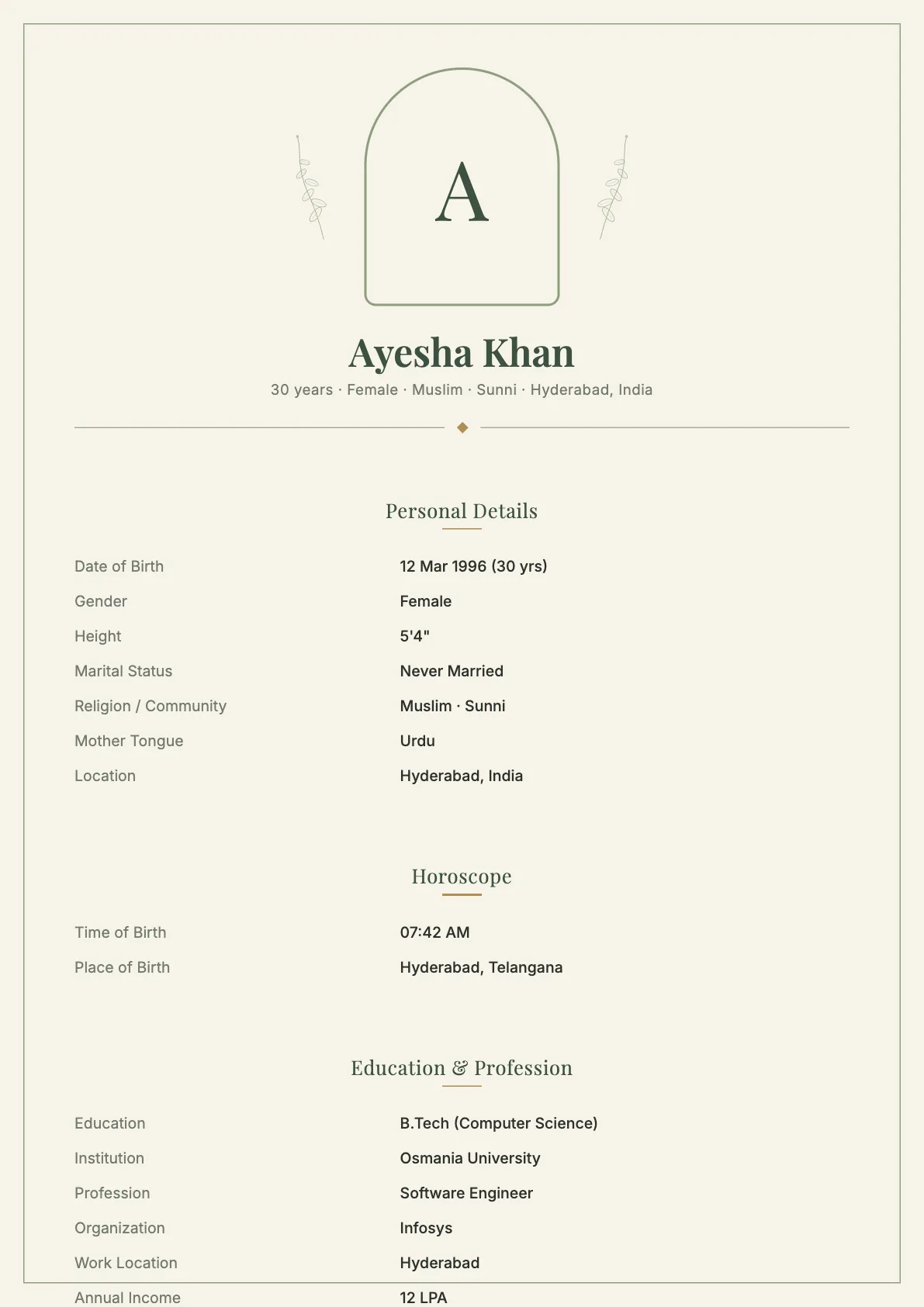
- No. The horoscope section only appears in your biodata if you fill it in, so a family that does not practise kundli matching can leave the whole block empty and the section is omitted from the PDF.
- Should I mention caste and sub-caste?
- That is a family decision. The Religion / Community field takes whatever you want to write — "Hindu", "Hindu · Brahmin", or a sub-community — and you can keep it as broad or specific as you are comfortable with.
- Which invocation should I use?
- Shri Ganeshaya Namah is the most common on Hindu marriage biodata. Om and the swastik are equally acceptable, and choosing none is also fine.
Templates for this format